
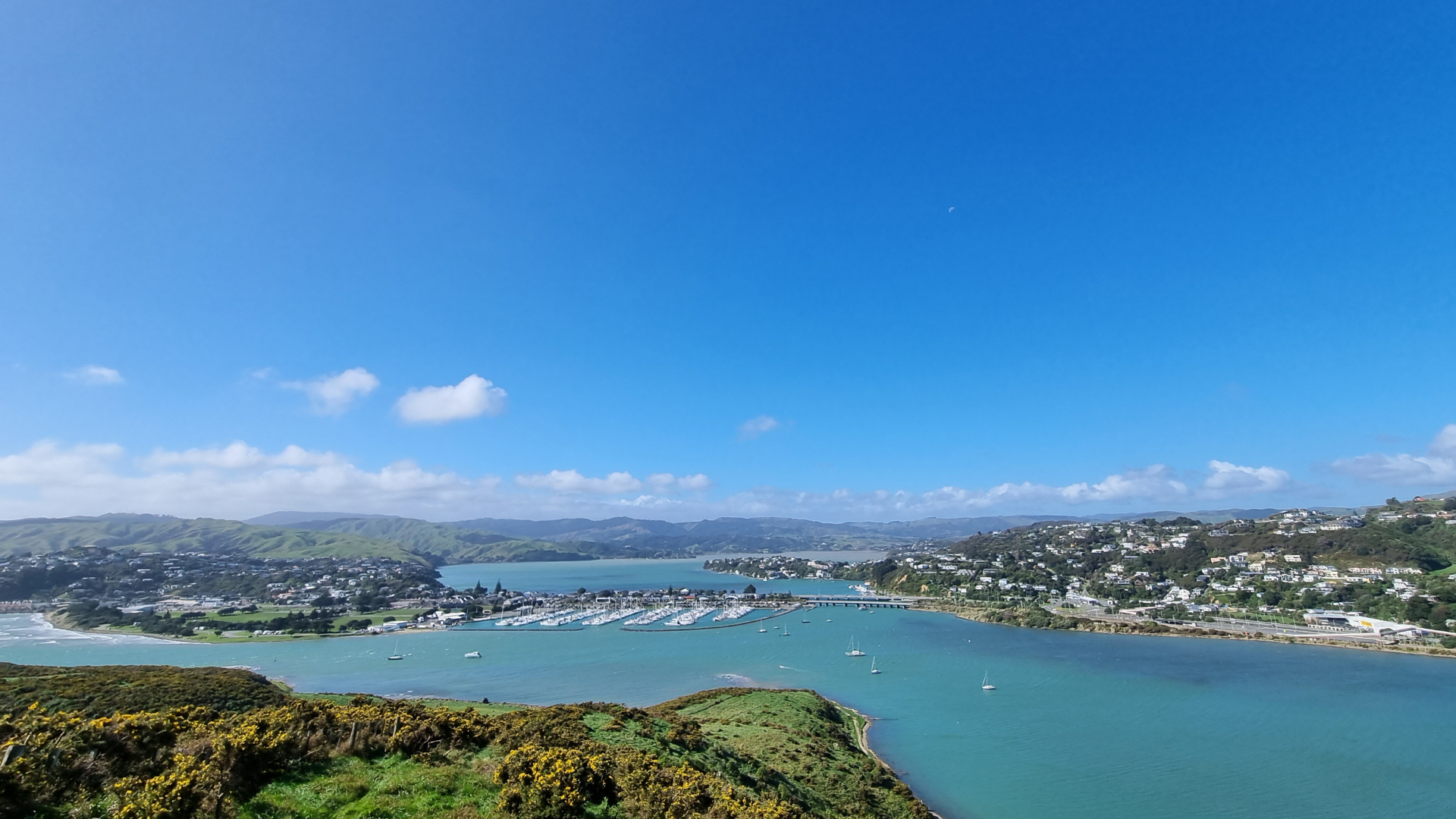
Gardening in Porirua means working with one of the Wellington region's most distinctive environments. We have a relatively mild coastal climate, good summer sunshine, fertile soils in many areas and an extraordinary natural landscape surrounding our suburbs. But Porirua gardeners also know the challenges: strong winds, heavy clay, exposed hillsides, wet winters and surprisingly dry conditions through summer.
The conditions can also change dramatically across a relatively short distance. A sheltered garden in Whitby can behave very differently from an exposed property in Titahi Bay, while gardens in Paremata, Plimmerton, Aotea and eastern Porirua each have their own microclimates.
The key to a successful Porirua garden is understanding the ground you're working with and creating a garden that belongs here.
Understanding Porirua's soil
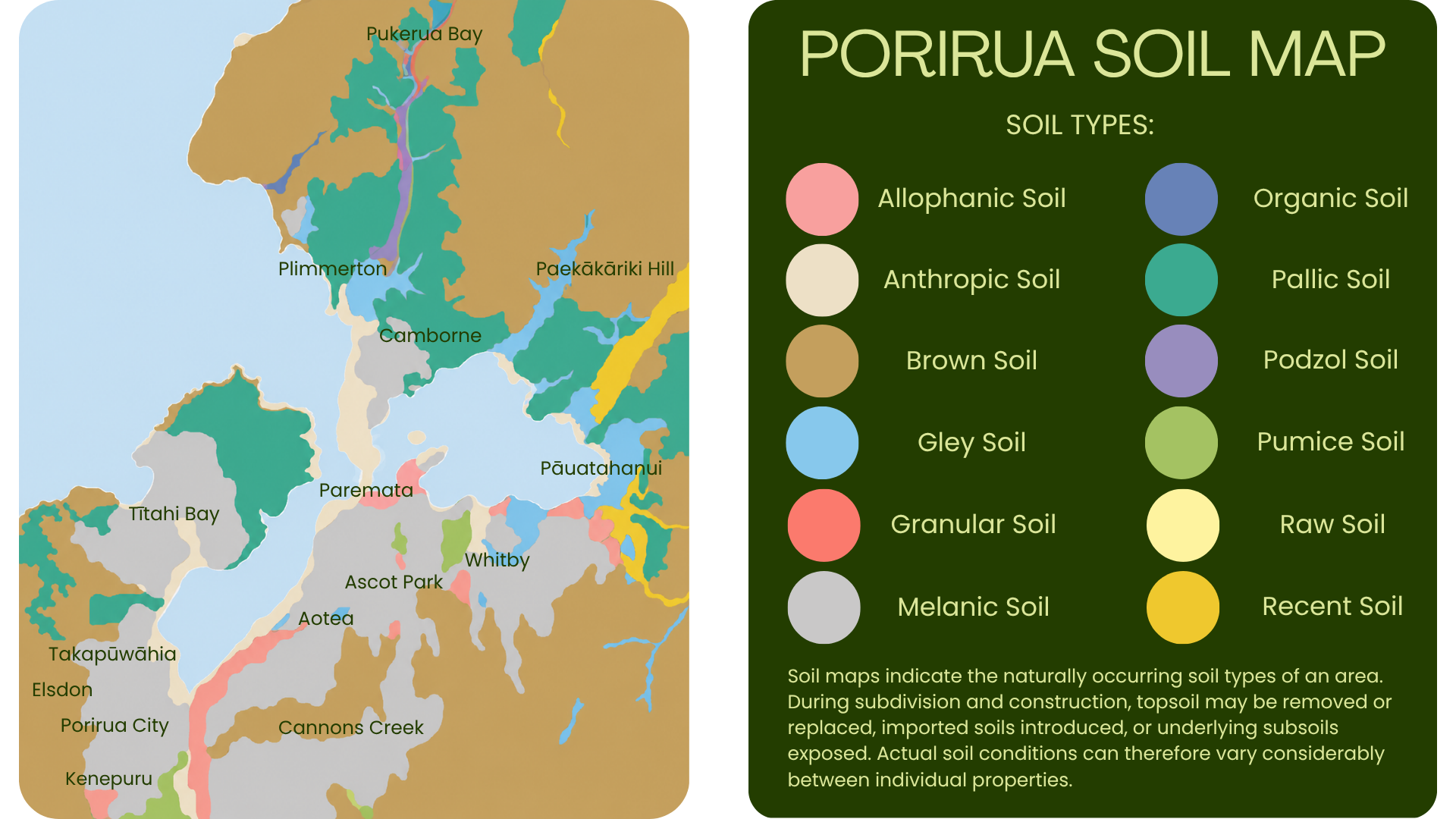
Porirua's soils are strongly influenced by the area's underlying greywacke geology, rolling hills, coastal environment and the sediments deposited around streams, valleys and Te Awarua-o-Porirua Harbour. As the soil map above shows, conditions can vary considerably across the city, so understanding the soil on your individual property is far more useful than assuming all Porirua gardens are the same.
Brown soils are widespread across many of Porirua's surrounding hills and generally offer good potential for gardening, although their depth, drainage and fertility can vary with slope and location. Pallic soils also occur across parts of the area and can have dense subsoils that restrict drainage and root development. Around valleys, waterways and lower-lying land, Gley soils may occur. These develop under wetter conditions and can remain poorly drained or waterlogged during winter. Areas of Recent soils are associated with younger sediments deposited by rivers and streams.
Residential development adds another layer of complexity. Excavation, imported topsoil, construction fill and machinery can mean the soil in your backyard is quite different from the natural soil shown on a regional map. Compaction is particularly common and can restrict drainage, oxygen and root growth even where the underlying soil would otherwise perform well.
Whatever the soil type, our approach is to work with it rather than replace it. Regular additions of compost and organic matter, keeping soil protected with mulch, minimising disturbance and avoiding working saturated ground all help improve soil structure and biological activity over time. Where drainage or compaction is an issue, we focus on addressing the underlying cause and choosing plants suited to the conditions rather than continually fighting the site.
Healthy gardens begin with healthy soil.
Sunshine, rainfall and summer moisture
Porirua has a relatively mild climate. Greater Wellington's ecological information records an average January maximum of around 21°C, an average July minimum of around 5°C, annual rainfall of roughly 1,020–1,030 mm, and moderate to very high summer solar radiation.
That combination creates excellent growing conditions, but it also means gardens can experience very different conditions between winter and summer.
Heavy soils that remain wet through winter can become surprisingly hard and dry during prolonged summer weather.
Building organic matter helps moderate both extremes.
A generous layer of mulch protects the soil from direct sunlight, suppresses weeds and slows evaporation. Deep, less frequent watering can also encourage plants to establish deeper root systems rather than becoming dependent on frequent surface watering.
As trees and shrubs mature, they create their own microclimates by shading the ground and reducing wind exposure.
A well-designed garden should gradually become more resilient as it grows.
The Porirua wind
Perhaps more than anything else, wind shapes our gardens.
Porirua's hills, harbour and proximity to Cook Strait create numerous exposed sites, and the wider Wellington Ecological District commonly experiences westerly to north-westerly winds. Coastal areas can face an additional challenge from salt-laden winds; Greater Wellington describes the Rocky Bay coast north of Titahi Bay, for example, as exposed to dry, salty winds predominantly from the north-west.
Instead of constantly replacing plants that struggle with exposure, design around it.
Hardy trees and shrubs can form the first layer of protection. Planting them in staggered groups allows them to filter the wind rather than attempting to stop it completely.
Behind that shelter, conditions become calmer and more suitable for less tolerant plants.
New trees in exposed positions may require staking while they establish, something Porirua City Council also recommends for plants vulnerable to wind rock.
Over several years, good shelter planting can completely transform the character of a property.
Plant for your part of Porirua
There isn't one plant palette that works everywhere.
An exposed Titahi Bay garden may need plants capable of tolerating wind, salt and periods of dryness.
A sheltered Whitby garden might support woodland-style planting and more moisture-loving species.
A steep section around the surrounding hills requires careful consideration of erosion, drainage and slope stability.
Lower areas may need plants capable of handling wetter ground.
That's why we believe in the horticultural principle of the right plant, in the right place.
Porirua City Council's own nursery grows plants locally, including material propagated from locally sourced seeds and cuttings, specifically suited to Porirua conditions.
Look to Porirua's original landscape
Before widespread clearance, much of Porirua was characterised by kohekohe–tawa forest, alongside areas of flax and saltmarsh. Remnants of these ecosystems still survive throughout the city.
Porirua Western Forest is particularly special. Its native forest supports more than 180 native plant species, over 60 fern species and 14 orchid species, and forms part of an important network of habitat connecting places including Te Awarua-o-Porirua Harbour, Mana Island, Whitireia Coast and Taupō Swamp.
You don't need to recreate native bush in your backyard.
But we can take inspiration from it.
Native plants such as kohekohe, māhoe, kawakawa, mānuka, kānuka, koromiko/hebe, harakeke, tī kōuka, pittosporum species and suitable podocarps can all contribute to gardens that feel connected to the wider Porirua landscape when matched carefully to the conditions of the site.
Native and exotic plants don't have to be opposing ideas either.
Fruit trees, roses, flowering perennials and productive gardens can sit alongside native trees and shrubs. A thoughtfully designed garden can combine horticultural traditions while still providing valuable habitat.
Your backyard is part of a much bigger ecosystem
One of the most exciting things about gardening in Porirua is that our gardens can contribute directly to the ecological health of the city.
Native forest remnants, wetlands, streams, reserves, the coastline and Te Awarua-o-Porirua Harbour form an interconnected ecosystem.
Our backyards sit between them.
A garden containing trees, shrubs, flowering plants, groundcovers and areas of shelter can become another small piece of that network, providing food and habitat for native birds, insects, lizards and other wildlife.
Porirua's remaining natural areas already support native birds, invertebrates and lizards, and habitat connections allow wildlife to move between important ecological areas.
That means even relatively small suburban gardens can matter.
Garden with the harbour in mind
What happens in our gardens doesn't necessarily stay in our gardens.
Rain falling on Porirua eventually makes its way through drains, streams and waterways towards Te Awarua-o-Porirua Harbour.
Exposed soil can be carried away by wind and rain, particularly from silt and clay soils, eventually entering streams and affecting freshwater and marine ecosystems.
This makes soil care an environmental issue as well as a gardening one.
Keep soil covered.
Use mulch.
Plant bare slopes.
Reduce unnecessary chemical use.
Slow water down and allow it to soak into the ground where practical.
Porirua City Council and Ngāti Toa Rangatira are already undertaking extensive streamside planting throughout the catchment to improve water quality, reduce erosion and increase native biodiversity.
Our gardens can contribute to the same goal.
Create layers of life
Natural forests aren't made from isolated specimen plants surrounded by bare ground.
They grow in layers.
A resilient garden can do the same.
Start with larger trees where space permits. Beneath them, introduce smaller trees and shrubs. Add flowering perennials, grasses and ferns, followed by groundcovers and organic mulch protecting the soil below.
Different layers create different habitats.
They also help shade the soil, reduce moisture loss, intercept wind, suppress weeds and make gardens feel established and abundant.
Even fallen leaves and pieces of old wood have value. In the right places, allowing some organic material to remain provides habitat for insects and fungi while slowly returning nutrients to the soil.
A healthy garden doesn't have to be perfectly tidy.
It should feel alive.
Work with the seasons
Porirua's relatively mild climate means there's something to do in the garden throughout most of the year, but good horticulture means doing jobs when the plant and conditions are ready for them.
Autumn is one of our favourite planting periods. Warm soil and increasing rainfall give new plants time to establish before summer.
Winter provides opportunities for structural work, planting and appropriate pruning.
Spring brings rapid growth and is the time to prepare lawns, feed plants, manage weeds and get ahead before summer.
Summer becomes about maintaining moisture, harvesting, deadheading and enjoying what the previous seasons have created.
Gardens aren't static landscapes.
They're living systems responding continuously to light, temperature, rainfall and the changing seasons.
Growing better gardens in Porirua
A great Porirua garden shouldn't need to fight Porirua.
It should respond to it.
Our wind, hills, harbour, clay soils, sunshine and remaining native ecosystems give this city its character. When we understand those conditions, we can create gardens that are easier to care for, more resilient and far richer in life.
At Good Ground Horticulture, we believe beautiful gardens and healthy ecosystems can be the same thing.
By caring for our soil, choosing plants thoughtfully, creating habitat, reducing unnecessary chemicals and working with the seasons, every garden can become a small contribution to a healthier Porirua.
Better soil. More life. Beautiful gardens.
Growing a better future, from the ground up.
